Most travelers race from Geneva Airport to Chamonix with one goal: reach the slopes fast. They buckle in, eyes on phones, missing the first glimpse of Mont Blanc behind drifting clouds. But here’s the truth-this journey isn’t just a transfer. It’s the opening chapter of your mountain story. For generations, families have passed down this route not for speed, but for the shared silence when the peaks come into view. Choosing how you travel shapes what you remember. And with the right path-and the right start-you turn arrival into experience.
Direct route vs. the scenic detour: choosing your path
The efficiency of the Autoroute Blanche
For those short on time or facing late arrivals, the A40-known as the Autoroute Blanche-is the most direct link between Geneva and Chamonix. In clear conditions, the drive takes about one hour, staying entirely on French territory after crossing near Gaillard. This route avoids Swiss roads, so there’s no need for a motorway vignette. Traffic typically builds during weekend arrivals and holiday peaks, especially between 4 PM and 7 PM. While it’s the fastest option, it trades views for efficiency, following the Arve Valley with only fleeting glimpses of the surrounding massifs.
Elevating the arrival with Alpine vistas
Taking the scenic route means trading minutes for moments. Winding through villages like Cluses or Sallanches, you notice the shift in atmosphere-the air grows crisper, the architecture more rustic, and the mountains loom larger. This isn’t just about scenery; it’s about rhythm. A slower pace lets you absorb the transition from Geneva’s lakeside calm to the raw grandeur of the French Alps. The valley roads offer pull-offs where Mont Blanc appears in full frame, ideal for early photos or simply pausing before ski boots hit snow.
| Route Type | Visual Appeal | Average Duration | Complexity |
|---|---|---|---|
| Quick Highway (A40) | Moderate - distant peaks | ~60 minutes | Low - well-signed, wide lanes |
| Scenic Valley Road (via Cluses) | High - village charm, close views | ~75 minutes | Medium - winding sections |
| Martigny High Road (via Switzerland) | Very High - panoramic valleys | ~100 minutes | High - mountain passes, border crossing |
Professional mountain road expertise makes all the difference, and for a seamless and scenic arrival at your chalet, booking a Geneva Chamonix taxi ensures you focus on the views rather than the traffic.
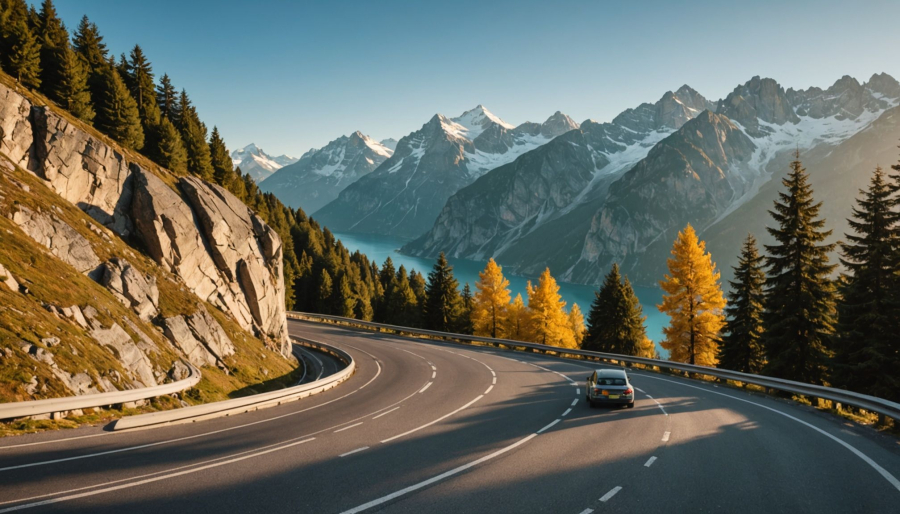
Navigating via Lake Geneva and Martigny
The Forclaz Pass panoramic experience
Leaving Geneva along the southern shore of Lake Geneva, the road climbs steadily toward Martigny. This Swiss stretch feels different-orderly, green, and quiet. Then comes the ascent of the Col de la Forclaz, a serpentine climb that rewards drivers with sweeping views of the Rhône Valley. On your right, terraced vineyards cling to steep slopes; to the left, the Dents du Midi pierce the skyline. It’s a route favored by cyclists and photographers alike, where every hairpin turn reveals a new perspective.
Crossing the border at Le Châtelard
At Le Châtelard, you cross from Switzerland into France-though there’s no formal checkpoint, the change in landscape is unmistakable. Swiss precision gives way to rugged wilderness. The roads narrow, the guardrails show more wear, and the French Alps rise aggressively on all sides. This isn’t just a border crossing; it’s a transition into high-altitude terrain where weather shifts fast and mountain rules apply. It’s here that many travelers feel they’ve truly entered Chamonix country.
Stopping in Finhaut for Alpine architecture
The village of Finhaut, perched above Martigny, offers a quiet moment before the final descent. Traditional chalets de montagne with stone foundations and wooden cladding stand against the snowline. While small, it’s a place where time slows-ideal for a coffee or a photo stop. For private transfers, these pauses aren’t delays; they’re part of the journey’s value. Local drivers know which spots offer the clearest views without disrupting flow, making each stop feel intentional.
Planning for the best road conditions
Managing seasonal peak travel times
Weekends and school holidays bring predictable congestion, especially on Friday afternoons and Sunday evenings. The A40 funnels traffic like a bottleneck, and delays of 20-30 minutes are common near Passy and Servoz. To avoid this, early departures-ideally before 9 AM-make a real difference. Evening arrivals are smoother, though fog can settle in the valley after dark. Midweek travel offers the most reliable timing. If you're flying in, consider adjusting your flight window slightly to sidestep the worst of it. Timing is half the battle when crossing mountain terrain.
Essential preparations for a scenic drive
Logistics and child safety comfort
Winding mountain roads demand proper preparation, especially with young travelers. Child car seats are mandatory in France for children under 10, and rental agencies don’t always provide them in good condition. A reliable transfer service includes well-maintained, age-appropriate seats-no last-minute stress at baggage claim. Motion sickness is another real concern on tight bends, so keep windows cracked and plan for fresh-air stops.
Best photographic viewpoints along the Arve Valley
Three spots stand out for first views of the Mont Blanc massif: - Just after Le Fayet, where the valley opens and the Aiguille du Midi appears - The bridge near Saint-Gervais-les-Bains, offering a wide-angle shot of the entire range - The pull-off at Les Houches, where the train tracks meet the highway and the peaks reflect in the Arve River
These aren’t just photo ops-they’re milestones. Each one marks your deeper entry into the mountains.
- Polarized sunglasses - essential for cutting snow glare at high altitude
- Water and snacks - hydration matters above 1,000 meters
- Camera or phone ready - views appear suddenly on valley bends
- Motion sickness remedies - especially for back-seat passengers
- Flexible schedule - weather and traffic can shift plans fast
The benefits of a local private transfer service
Knowledge of hidden shortcuts
Local drivers know what maps don’t show. During peak traffic, a quick detour through Magland or Sallanches can shave 15 minutes off the trip using secondary roads that parallel the A40. These aren’t risky backtracks-they’re tested alternatives known only to those who make the journey weekly. That kind of insight comes from decades behind the wheel, not an app.
Vehicle suitability for mountain terrain
Not all vehicles handle mountain conditions equally. A standard sedan might struggle in winter snow, while a 4x4 or high-clearance minivan grips better on icy patches and handles steep village streets with ease. Professional services equip their fleets accordingly-winter tires from October to April, reinforced brakes, and interior heating that works at altitude. It’s not luxury; it’s necessity.
Personalized stops and flexible pacing
This is where private transfers outshine shuttles. Need a bathroom break? A coffee in a quiet village? Want to catch the sunset over Mont Blanc? A local driver adjusts without hassle. No fixed schedules, no waiting for others. It’s your timeline, your journey. Whether it’s dropping gear at a rental shop or pausing at a family-run fromagerie, the flexibility makes the trip feel personal.
Adapting your route to the Mont Blanc weather
Driving during heavy winter snowfall
When snow blankets the region, high passes like Col du Montet may close without warning. Visibility drops, chains are required, and even experienced drivers rethink their route. In these conditions, the tunnel from Le Fayet to Chamonix becomes the safer choice-shorter, more predictable, and maintained around the clock. Real-time weather checks are non-negotiable. Local drivers monitor conditions daily, adjusting routes before passengers even land.
Spring and summer clearing for high passes
Some of the most scenic roads open late. The Montets pass, for example, often stays closed until late June due to avalanche risk and snowmelt. When it opens, the reward is stunning-lush meadows, wildflowers, and clearer views than in winter. But access depends on municipal clearance, not calendar dates. Again, local knowledge wins: drivers know which routes are passable and which are still marked “déneigement en cours.”
Frequently asked questions for your trip
What happens if our flight to Geneva is delayed by several hours?
Most private transfer services track flights in real time and adjust arrival times automatically. Drivers wait without additional fees, and you’ll receive updates via SMS or email. Just focus on your flight-your driver handles the rest.
Do I need a Swiss motorway vignette if we take the scenic route?
No, if you cross into France near Gaillard or use the A40, you avoid Swiss motorways entirely. However, routes through Martigny or along Lake Geneva require a vignette. Rental cars usually include it, but always confirm with your agency.
Is the Martigny route significantly longer than the highway?
Yes, by about 40 minutes. While more scenic, the Martigny route covers roughly 100 km versus 85 km via the A40. The extra time is spent on mountain passes and border transitions, not just distance.
Are there additional costs for luggage or ski equipment on these routes?
Generally, no. Most private transfer services include ski bags, boot bags, and standard luggage at no extra cost. Some may charge for oversized items, but this is rare-always confirm when booking.
